
In today’s world, people are spending thousands on expensive shampoos, serums, hair oils, and treatments, yet they complain about thinning hair, visible scalp, and slow hair growth. The harsh truth is — most people focus only on external care while completely ignoring internal nutrition.
Hair growth is not magic. It is a natural process that requires the right raw materials from your diet. If your plate lacks essential nutrients, no amount of costly hair products can give you thick, strong, and healthy hair.
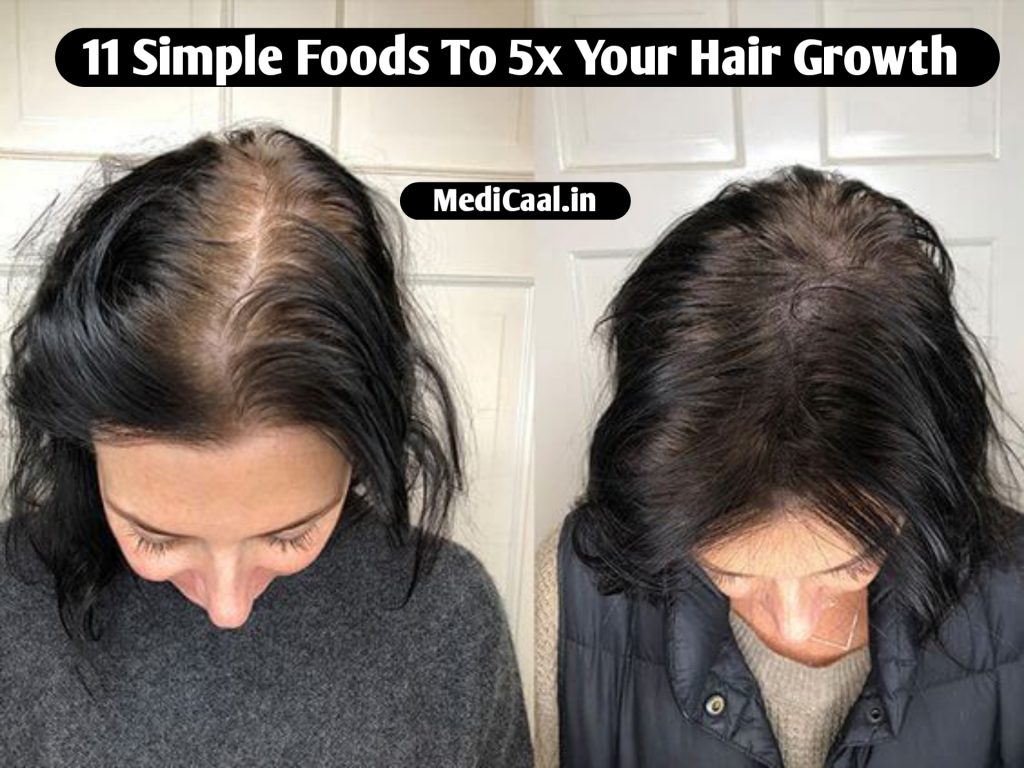
In this article, we reveal 11 simple, everyday Indian foods that can dramatically improve hair growth, reduce hair fall, and increase hair thickness — without spending much money.
Why Are Your Hair Falling and Becoming Thin?
Hair thinning and excessive hair fall don’t happen by accident. Here are the most common root causes seen in 90% of Indians:
- Poor Nutrition (Malnutrition in disguise): High calories but zero nutrients. Breakfast = tea + biscuits, lunch = roti + sabzi with almost no protein or iron.
- Chronic Stress: High cortisol levels push hair follicles into resting phase, leading to increased shedding.
- Iron Deficiency: Very common in India, especially among women. Without iron, hair follicles don’t get enough oxygen.
- A Protein Deficiency: Hair is made For keratin. Low protein means weak, thin hair strands.
- Vitamin D Deficiency: Keeps hair follicles in “sleep mode.”
- Poor Gut Health: Even if you eat healthy food, an unhealthy gut cannot absorb nutrients properly.
The good news? All these issues are reversible. When you start feeding your body the right nutrients, hair follicles begin to revive from within.
11 Powerful Everyday Foods That Can Boost Hair Growth Naturally
Here are 11 simple, affordable, and easily available foods that provide the exact nutrition your hair needs:
- Eggs Eggs are the gold standard for hair health. They are rich in high-quality protein, biotin, and vitamin D — all essential for reviving dormant follicles and strengthening hair strands.
- Curd (Dahi) & Paneer Excellent vegetarian sources of protein and calcium. They help in keratin production and improve overall scalp health.
- Dal, Chickpeas (Chhole), and Kidney Beans (Rajma) These are complete protein + iron powerhouses.
- Spinach (Palak) and Fenugreek (Methi) Both are loaded with iron. For better absorption, always pair them with vitamin C sources like lemon or amla.
- Beetroot Naturally increases nitric oxide in the body, which improves blood flow to the scalp and nourishes hair follicles.
- Pumpkin Seeds & Sesame Seeds (Til) Cheap yet powerful sources of zinc. Zinc repairs damaged follicles, reduces dandruff, and promotes faster scalp healing. Just one tablespoon daily can make a big difference.
- Walnuts and Flaxseeds Best vegetarian sources of Omega-3 fatty acids. They keep follicles hydrated, reduce inflammation, and prevent aggressive hair fall.
- Amla (Indian Gooseberry) The king of Vitamin C. It helps produce collagen, which keeps hair roots strong and prevents premature greying.
- Guava An underrated superfood. Guava contains more vitamin C than oranges and supports collagen production while improving iron absorption.
- Ragi (Finger Millet) and Bajra (Pearl Millet) Highly rich in iron and calcium. These traditional millets are especially beneficial for women struggling with hair fall.
- Desi Ghee Many people avoid ghee nowadays, but pure desi ghee reduces inflammation and creates a healthy environment for hair follicles. A small amount daily can work wonders.
Bonus Foods for Gut Health: Papaya and Banana — Papaya improves digestion and nutrient absorption, while banana helps maintain hydration and potassium balance in the body.
How Long Does It Take to See Results?
When you consistently include these foods in your daily diet:
- Visible reduction in hair fall within 15–30 days
- Improved hair thickness and strength in 3–4 months
These are not assumptions — these are results observed in clinical practice.
Lifestyle Tips That Double Your Results
Diet alone is not enough. Support it with these habits:
- Manage stress (high cortisol damages hair cycle)
- Sleep 7–8 hours daily (growth hormones work at night)
- Drink plenty of water (dehydration slows nutrient delivery to follicles)
- Reduce sugar intake (excess sugar increases DHT, which shrinks hair follicles)
- Avoid junk food and processed items (they create inflammation)
Remember: Expensive shampoos and serums are only supporting actors. Nutrition is the real hero for hair growth.
Final Words
If you want thicker, stronger, and faster-growing hair, stop depending only on external products. Start feeding your hair from inside with these simple, zero-cost (or very low-cost) Indian kitchen foods.
Your hair follicles are like small engines — give them the right fuel (protein, iron, zinc, omega-3, vitamins), and they will start working at full power again.