
A headache is something almost everyone experiences at some point. Sometimes it happens after a long day at work, a stressful situation, lack of sleep, or simply because you have not had enough water. For many people, a headache goes away after some rest or a good night’s sleep. But when headaches start occurring frequently, become unusually severe, or interfere with everyday activities, they deserve more attention.
Frequent headaches can have many different causes. In most cases, they are not related to a serious medical problem, but recurring headaches can sometimes be a sign that something in your routine or health needs to be addressed. Understanding the possible triggers can help you manage them more effectively.
What Is a Headache?
A headache is pain or discomfort felt in the head, scalp, or upper neck area. It can feel different from one person to another. Some people experience a dull, constant pressure, while others may feel throbbing or sharp pain.
The location of the pain can also vary. It may affect the forehead, temples, back of the head, one side of the head, or the area around the eyes.
Primary headaches occur on their own and are not caused by another underlying medical condition. Tension-type headaches and migraines are common examples.
Secondary headaches occur because of another condition or factor, such as an infection, dehydration, medication overuse, or an injury.
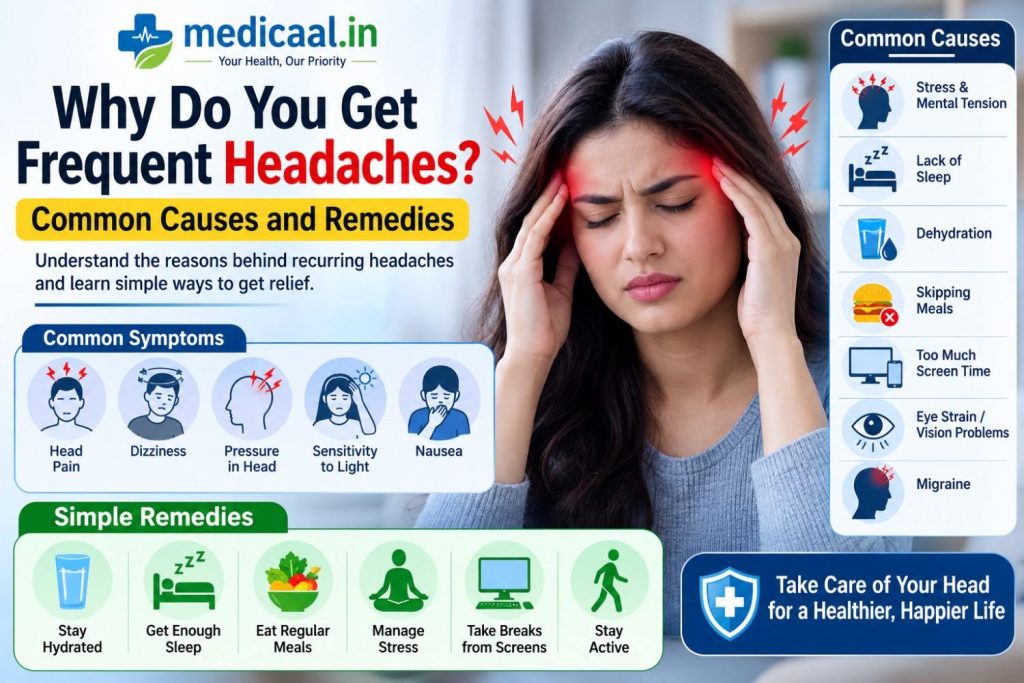
Common Reasons for Frequent Headaches
There is rarely one single reason behind every recurring headache. Lifestyle habits, environmental factors, stress, and certain medical conditions can all contribute.
1. Stress and Mental Tension
Stress is one of the most common headache triggers. When you are under pressure for a long period, the muscles around the neck, shoulders, scalp, and jaw can become tense.
This may contribute to a tension-type headache. The pain is often described as pressure or tightness around the head.
Work pressure, financial concerns, relationship problems, examinations, lack of relaxation, and prolonged mental strain can all contribute to stress-related headaches.
Finding ways to manage stress may therefore reduce the frequency of headaches for some people.
2. Lack of Sleep
Your sleeping pattern can have a major effect on how you feel during the day. Sleeping too little, frequently changing your sleep schedule, or having poor-quality sleep may trigger headaches.
Adults generally benefit from maintaining a regular sleep schedule and getting enough sleep for their individual needs.
Instead of frequently changing your bedtime and wake-up time, try to follow a consistent routine. A relaxing evening routine and limiting excessive screen use before bedtime may also help improve sleep quality.
3. Dehydration
Not drinking enough fluids is another common reason people develop headaches.
Your body needs adequate fluids to function normally. Sweating, hot weather, exercise, vomiting, diarrhea, or simply forgetting to drink water throughout the day can increase the risk of dehydration.
If you notice that headaches often occur after spending a long time outdoors or exercising, dehydration could be one possible contributor.
Drinking fluids regularly throughout the day can help prevent dehydration-related headaches.
4. Skipping Meals
Going for long periods without eating can sometimes trigger a headache. This may happen because of changes associated with hunger and low blood sugar.
People who are busy at work or school may unintentionally skip breakfast or lunch and then experience headache, weakness, irritability, or difficulty concentrating.
Maintaining regular meals and choosing nutritious foods can help avoid headaches associated with prolonged hunger.
5. Too Much Screen Time
Many people spend several hours every day looking at computers, smartphones, tablets, and televisions. Long periods of screen use can contribute to eye strain, poor posture, and fatigue, which may trigger or worsen headaches in some individuals.
If you work on a computer, take regular breaks. Look away from the screen periodically and give your eyes a chance to relax.
Your sitting position also matters. Keeping your screen at a comfortable height and maintaining good neck and shoulder posture may reduce unnecessary muscle tension.
6. Eye Strain or Uncorrected Vision Problems
Difficulty seeing clearly can make your eyes work harder than necessary. Some people may develop headaches after reading, driving, using a computer, or performing other visually demanding activities.
If headaches frequently occur after visual tasks or you have difficulty seeing distant or nearby objects clearly, consider getting your eyesight checked by an eye-care professional.
Wearing an appropriate prescription, when required, may help if an uncorrected vision problem is contributing to the headaches.
7. Caffeine Changes
Caffeine can affect headaches differently from person to person. Some people notice that caffeine temporarily improves certain headaches, while consuming large amounts or suddenly stopping regular caffeine intake can trigger headaches.
If you drink several cups of tea, coffee, energy drinks, or other caffeinated beverages every day, suddenly cutting them out may cause withdrawal headaches.
Reducing caffeine gradually rather than making a sudden change may be easier for some people.
8. Migraine
Migraine is more than an ordinary headache. It can cause moderate to severe, often throbbing pain and may affect one side of the head, although both sides can also be involved.
Some people experience nausea, vomiting, and increased sensitivity to light or sound during a migraine attack.
Certain people also experience an aura before or during a migraine. This can include temporary visual changes, such as flashing lights or zigzag patterns.
Common migraine triggers can include stress, lack of sleep, certain foods, hormonal changes, strong smells, bright lights, and changes in routine. However, triggers vary considerably between individuals.
If you regularly experience migraine-like symptoms, speaking with a healthcare professional can help determine an appropriate management plan.
Simple Ways to Manage Common Headaches
Stay Hydrated
Drink enough fluids throughout the day. If you have been sweating heavily or have lost fluids because of vomiting or diarrhea, you may need additional fluids and should seek medical advice if symptoms are significant.
Get Adequate Rest
If your headache is related to tiredness or lack of sleep, resting in a quiet environment may help.
Try to maintain a regular sleep schedule rather than relying on irregular sleep patterns.
Take Breaks From Screens
If you spend much of your day using a computer or phone, take regular breaks. Adjust screen brightness and positioning to a comfortable level and avoid sitting in the same position for many hours.
Eat Regularly
Avoid regularly skipping meals. Include a balanced combination of whole grains, vegetables, fruits, protein sources, and other nutritious foods in your diet.
Manage Stress
Simple activities such as walking, stretching, breathing exercises, meditation, hobbies, or spending time away from work may help reduce stress.
You do not necessarily need a complicated routine. Even short periods of relaxation during a busy day can be useful.
Maintain Good Posture
Poor posture can place extra strain on the muscles of your neck and shoulders. If you work at a desk, keep your back supported, relax your shoulders, and position your screen comfortably.
Regular stretching can also help reduce muscle stiffness.
Be Careful With Painkillers
Over-the-counter pain medicines can provide relief for some headaches, but frequent use can itself contribute to a condition called medication-overuse headache.
If you find yourself needing headache medicine very often, it is better to discuss the situation with a healthcare professional rather than repeatedly taking medication on your own.
When Should You See a Doctor?
Occasional headaches are common, but recurring headaches should not simply be ignored if they are becoming more frequent or affecting your quality of life.
Consider speaking with a healthcare professional if:
- Your headaches occur frequently.
- Headaches are interfering with work, school, sleep, or normal activities.
- You regularly need pain medication to manage headaches.
- Your headache pattern has changed significantly.
- Headaches are accompanied by other unusual symptoms.
Keeping a headache diary can also be useful. Write down when the headache starts, how long it lasts, where the pain occurs, what you ate or drank, how much you slept, your stress level, and any other symptoms.
Over time, this information may help identify possible triggers.
Headache Warning Signs That Need Urgent Attention
Not every headache is an emergency, but certain symptoms require immediate medical evaluation.
Seek urgent medical care if a headache:
- Starts suddenly and is extremely severe.
- Occurs after a significant head injury.
- Occurs with severe vision problems.
- Comes with repeated vomiting or severe illness.
- Is very different from headaches you normally experience.
Final Thoughts
Frequent headaches can be frustrating, especially when they interfere with work, studies, sleep, or family life. The good news is that many common headache triggers are related to everyday habits and can sometimes be improved by making simple changes.
Remember that a headache is a symptom, not a diagnosis. Paying attention to your body and seeking appropriate medical advice when necessary is one of the best ways to protect your health.
Medical Disclaimer: This article is intended for general educational purposes only and should not be considered a substitute for professional medical advice, diagnosis, or treatment.

The Medicaal Editorial Team researches everyday health and nutrition topics and explains them in simple, practical language. Our articles are written for general wellness education — to help readers understand common health questions without the jargon.