
Dengue can affect people of all ages and is particularly common during and after the rainy season when mosquito populations increase. Although many people recover from dengue without serious complications, some cases can become severe and require immediate medical attention.
Understanding how dengue spreads, recognizing its early symptoms, and taking simple preventive measures can significantly reduce the risk of infection. This article explains the causes and symptoms of dengue and discusses practical precautions that individuals and families can follow to stay protected.
What Is Dengue?
The virus is mainly transmitted to humans through the bite of infected Aedes mosquitoes, particularly Aedes aegypti. These mosquitoes can also transmit other viral infections, such as chikungunya and Zika.
Unlike some mosquitoes that are more active at night, Aedes mosquitoes commonly bite during the daytime. They can breed in small amounts of stagnant water found around homes, offices, schools, and other places.
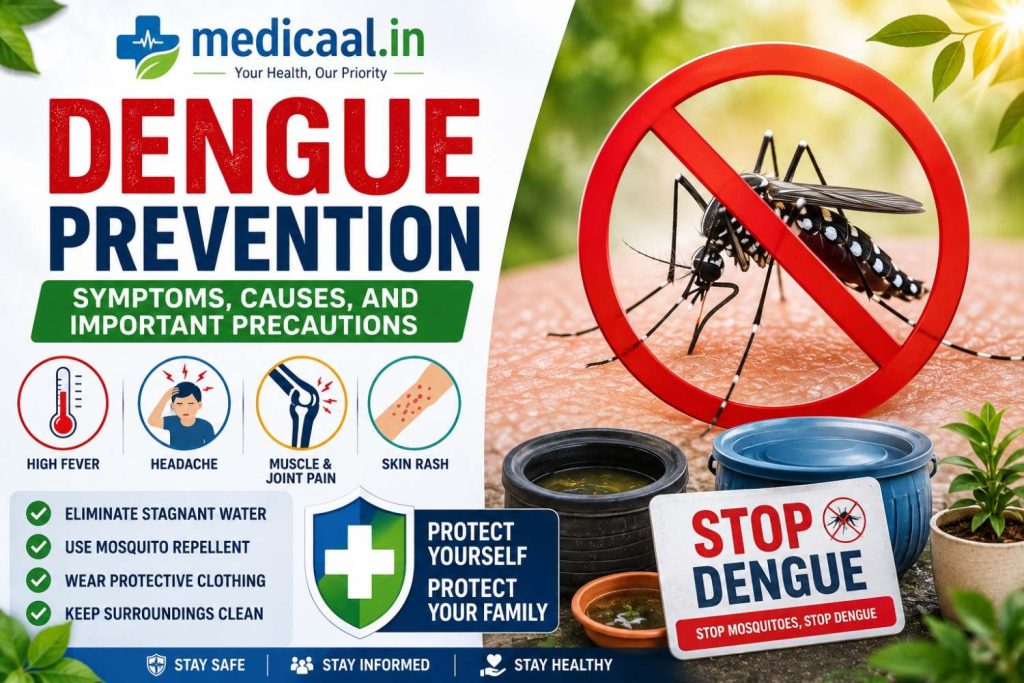
There are several types, or serotypes, of dengue virus. A person can develop dengue more than once because infection with one serotype does not provide complete protection against infection with the other serotypes.
How Does Dengue Spread?
Dengue does not normally spread directly from one person to another through casual contact. Instead, the virus follows a cycle involving humans and mosquitoes.
This is why controlling mosquito populations is one of the most important ways to prevent dengue outbreaks.
The mosquitoes responsible for dengue often lay their eggs in containers holding stagnant water. Common breeding places include buckets, flowerpot trays, discarded tires, coolers, water tanks, bottles, and other containers that collect rainwater.
Common Symptoms of Dengue
The most common symptoms include:
- High fever
- Severe headache
- Pain behind the eyes
- Muscle and joint pain
- Bone pain
- Nausea or vomiting
- Extreme tiredness
- Skin rash
- Mild bleeding, such as bleeding from the nose or gums, in some cases
The fever can sometimes be quite high and may develop suddenly. Muscle and joint pain can also be significant, which is why dengue is sometimes referred to as “breakbone fever.”
However, symptoms can vary from person to person. Some infected individuals may have very mild symptoms or may not notice any symptoms at all.
Warning Signs of Severe Dengue
Most people with dengue recover within a period of time with proper supportive care. However, dengue can occasionally progress to a severe form.
Warning signs often appear around the time the fever starts to decrease. Therefore, a reduction in fever does not always mean that the person is completely out of danger.
Seek urgent medical attention if someone with suspected or confirmed dengue develops symptoms such as:
- Severe abdominal pain
- Persistent or repeated vomiting
- Bleeding from the nose or gums
- Vomiting blood
- Blood in the stool
- Unusual or extreme weakness
- Rapid breathing
- Restlessness or unusual drowsiness
- Pale or cold skin
- Significant dehydration
Severe dengue can cause serious complications, including problems related to bleeding, fluid loss, and circulation. Prompt medical care can be extremely important in such situations.
Who May Be at Greater Risk?
Anyone living in or traveling to an area where dengue is present can become infected. However, certain situations may increase the risk of complications.
People who have had dengue previously may be at increased risk of severe disease during a later infection with a different dengue serotype. Young children, older adults, pregnant women, and people with certain underlying health conditions may also require closer medical monitoring if they develop dengue symptoms.
If you develop a high fever after possible mosquito exposure, it is better to speak with a healthcare professional rather than assuming that it is simply a seasonal fever.
How to Prevent Dengue at Home
The best way to prevent dengue is to reduce mosquito bites and eliminate mosquito breeding areas.
1. Remove Stagnant Water
Regularly inspect your home and surroundings for containers that collect water. Empty and clean buckets, flowerpot trays, coolers, discarded containers, and similar items.
Water storage containers should be properly covered so mosquitoes cannot enter and lay eggs.
Even small amounts of stagnant water can become potential breeding sites, so regular cleaning is important.
2. Use Mosquito Repellent
Applying an appropriate mosquito repellent to exposed skin can help reduce mosquito bites. Follow the instructions on the product label and use it as directed.
Parents and caregivers should check whether a particular repellent is suitable for young children before using it.
3. Wear Protective Clothing
When possible, wear long-sleeved shirts, long pants, socks, and other clothing that reduces exposed skin. This can be especially helpful in areas with a high mosquito population.
Loose-fitting clothing can also make it more difficult for mosquitoes to reach the skin.
4. Use Window and Door Screens
Mosquito screens on windows and doors can help prevent mosquitoes from entering indoor spaces. Repair damaged screens and avoid leaving doors and windows open unnecessarily in mosquito-prone areas.
5. Use Mosquito Nets When Appropriate
Mosquito nets can provide an additional layer of protection, particularly for babies, young children, and people who sleep during the daytime.
Although Aedes mosquitoes commonly bite during daylight hours, protecting sleeping areas can still be useful.
Preventing Dengue in the Community
Dengue prevention is not only an individual responsibility. Communities can play an important role in controlling mosquito breeding.
Residents can work together to keep streets, drains, rooftops, parks, and public areas free from containers that collect stagnant water. Local authorities may also conduct mosquito-control activities in areas experiencing dengue outbreaks.
If several homes in a neighborhood have potential breeding sites, controlling mosquitoes in only one house may not be enough. Community participation can make prevention efforts much more effective.
What Should You Do If You Suspect Dengue?
If you develop a high fever along with headache, body pain, nausea, rash, or other symptoms associated with dengue, contact a healthcare professional.
A doctor may recommend blood tests depending on the timing of symptoms and the individual’s condition. Do not rely solely on symptoms to determine whether you have dengue because several other infections can cause similar symptoms.
It is also important to stay hydrated unless a healthcare professional has advised you to restrict fluids for another medical reason.
Avoid taking medicines without professional advice. In particular, people with suspected dengue should not self-medicate with aspirin or certain anti-inflammatory painkillers because they may increase the risk of bleeding. A healthcare professional can advise which fever or pain medication is appropriate.
Food and Fluids During Dengue
Maintaining adequate fluid intake is an important part of supportive care for people with dengue. Water, oral rehydration solutions, soups, and other suitable fluids may help prevent dehydration.
If vomiting, weakness, or poor appetite makes it difficult to drink enough, medical advice should be sought.
There is a lot of information online about specific foods, juices, or home remedies that are claimed to increase platelet counts or cure dengue. However, no particular food should be considered a substitute for proper medical evaluation and treatment.
A balanced diet and adequate fluids can support recovery, but severe symptoms require professional medical care.
Can Dengue Be Prevented Completely?
There is no way to guarantee complete protection from dengue in areas where the virus is circulating. However, consistent mosquito-control measures can greatly reduce the chances of infection.
The most effective approach is to combine several precautions rather than depending on only one method. Removing stagnant water, preventing mosquito bites, maintaining clean surroundings, and paying attention to dengue warnings in your local area can all help.
Final Thoughts
Dengue is a preventable mosquito-borne infection, but prevention requires regular attention. The most important step is to stop Aedes mosquitoes from breeding by eliminating stagnant water around homes and public spaces. Personal protection, such as mosquito repellent, protective clothing, screens, and mosquito nets, can provide additional protection.
Knowing the symptoms is equally important. A sudden high fever accompanied by severe headache, body pain, nausea, rash, or other symptoms should not be ignored, especially during a dengue outbreak. More serious warning signs such as abdominal pain, repeated vomiting, unusual bleeding, extreme weakness, or breathing difficulties require urgent medical attention.
Dengue can affect anyone, but simple daily precautions can make a meaningful difference. Keeping your home and surroundings free from mosquito breeding sites and seeking timely medical advice when symptoms appear are among the best ways to protect yourself, your family, and your community.
Medical Disclaimer: This article is intended for general educational purposes only and should not be considered a substitute for professional medical advice, diagnosis, or treatment. If you have symptoms of dengue or are concerned about your health, consult a qualified healthcare professional.

The Medicaal Editorial Team researches everyday health and nutrition topics and explains them in simple, practical language. Our articles are written for general wellness education — to help readers understand common health questions without the jargon.