
Constipation is a common digestive problem that can affect people of almost any age. For some people, it may happen occasionally after a change in diet, routine, travel, or daily habits. For others, constipation can become a recurring problem that causes discomfort, bloating, and difficulty passing stool.
Although constipation is often manageable with simple lifestyle changes, it should not always be ignored. Persistent constipation or constipation accompanied by certain warning signs may require medical evaluation.
The good news is that several everyday habits can support healthy bowel movements. Eating enough fiber, drinking adequate fluids, staying physically active, and responding to the natural urge to use the bathroom are some of the basic measures that may help.
What Is Constipation?
Constipation does not simply mean that you did not have a bowel movement on one particular day. People naturally have different bowel habits.
Generally, constipation can involve having fewer than three bowel movements in a week, passing hard or dry stools, having difficulty or pain while passing stool, or feeling that the bowel has not completely emptied.
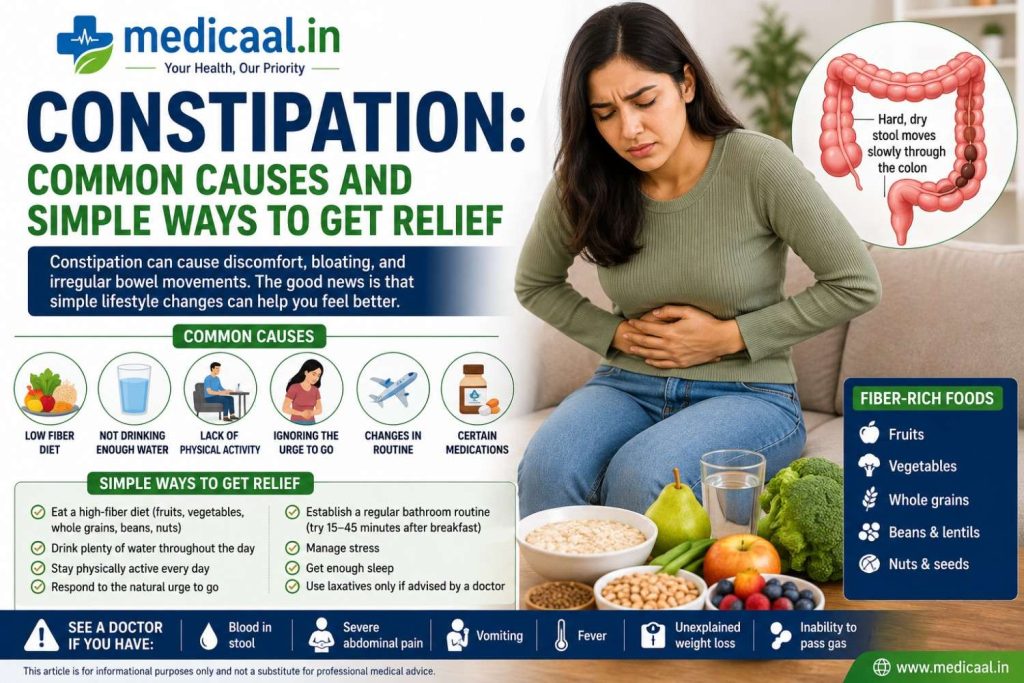
Some people may experience only one of these symptoms, while others may experience several at the same time.
Constipation can be temporary or long-lasting. It can also sometimes be a symptom of another health condition, which is why persistent or unusual symptoms should be discussed with a healthcare professional.
Common Symptoms of Constipation
The symptoms of constipation can vary from person to person. Common signs include:
- Hard, dry, or lumpy stools
- Fewer bowel movements than usual
- Straining while passing stool
- Pain or discomfort during bowel movements
- A feeling that some stool is still left in the bowel
- Bloating or abdominal discomfort
- Feeling that bowel movements require more effort than usual
Occasional constipation is common. However, if these symptoms continue for a long time or repeatedly return, it is worth looking at possible causes rather than simply treating the symptoms each time.
What Causes Constipation?
There can be more than one reason behind constipation. Diet, hydration, physical activity, medications, lifestyle changes, and certain medical conditions can all play a role.
1. Not Getting Enough Fiber
A diet that contains too little fiber is one of the common contributors to constipation.
Fiber is found naturally in foods such as fruits, vegetables, whole grains, beans, lentils, peas, nuts, and seeds. It helps add bulk to stool and can make it easier to pass.
Adults generally need around 22 to 34 grams of fiber per day, depending on factors such as age and sex. However, individual needs can vary.
If your current diet is low in fiber, increase it gradually rather than making a sudden large change. A rapid increase can sometimes cause extra gas or bloating.
2. Not Drinking Enough Fluids
Dehydration can contribute to constipation. When you do not consume enough fluids, stool may become harder and more difficult to pass.
Drinking enough water and other suitable fluids can help fiber work properly and may make stools softer. Your fluid requirements depend on factors such as your body size, activity level, health, climate, and other individual circumstances.
Instead of waiting until you are very thirsty, make drinking fluids a regular part of your day.
3. Lack of Physical Activity
A sedentary lifestyle may also contribute to constipation. Regular physical activity can support normal bowel function and may help relieve constipation.
You do not necessarily need an intense workout. Walking, cycling, stretching, or other activities that you can comfortably perform can be useful additions to your daily routine.
If you spend most of your day sitting, try getting up periodically and moving around.
4. Ignoring the Urge to Use the Bathroom
Busy schedules sometimes cause people to ignore the urge to have a bowel movement. Repeatedly delaying it may make it more difficult to maintain a regular bowel routine.
Whenever possible, give yourself enough time to use the bathroom instead of rushing. If you feel the natural urge to go, try not to postpone it unnecessarily.
5. Changes in Daily Routine
Constipation can occur when your normal routine changes. Travel, pregnancy, getting older, changes in eating habits, or changes in medications can affect bowel movements.
Some people notice constipation when they travel because their meals, sleep schedule, physical activity, and bathroom routine are different from normal.
6. Certain Medicines and Supplements
Some medicines and dietary supplements can cause or worsen constipation. Examples include certain antacids, iron supplements, some medicines for depression, certain blood-pressure medicines, and opioid pain medicines.
If you believe a medicine is causing constipation, do not stop taking it on your own. Talk with your doctor or pharmacist. They can determine whether the medicine may be contributing and whether an alternative or adjustment is appropriate.
Foods That May Help With Constipation
Changing your diet can be one of the simplest ways to support regular bowel movements.
Fruits
Many fruits contain fiber and can be included as part of a balanced diet. Apples with the skin, pears, oranges, and berries are examples of fruits that provide fiber.
Instead of relying on fruit juice alone, eating whole fruit generally provides more fiber.
Vegetables
Vegetables such as carrots, broccoli, green peas, and other fiber-containing vegetables can be useful additions to meals.
Try including vegetables regularly rather than eating large quantities only when constipation occurs.
Whole Grains
Whole-wheat foods, oatmeal, and other whole-grain options can provide dietary fiber.
If your usual diet contains mostly refined grains, gradually replacing some of them with whole-grain alternatives may increase your overall fiber intake.
Beans and Lentils
Beans, chickpeas, lentils, and similar foods can provide both fiber and other nutrients. They can be added to soups, salads, curries, or other meals.
If you are not used to eating many high-fiber foods, increase portions gradually to reduce the chance of bloating or excessive gas.
Nuts and Seeds
Nuts and certain seeds can also contribute fiber to your diet. They can be added to meals or eaten as part of a balanced snack.
Remember that fiber works best when accompanied by adequate fluid intake.
Simple Lifestyle Changes for Relief
Small, consistent habits may make a difference.
Drink Enough Fluids
Your exact fluid requirement depends on your individual health and circumstances.
Increase Fiber Gradually
Add more fruits, vegetables, legumes, and whole grains to your meals. I
Stay Physically Active
Regular movement can support bowel function. A daily walk can be a simple starting point for people who are otherwise inactive.
Create a Bathroom Routine
Some people may find it helpful to try having a bowel movement at a consistent time each day. NIDDK notes that trying 15 to 45 minutes after breakfast may help some people because eating can stimulate movement in the colon.
Do Not Ignore the Urge
If your body signals that you need to use the bathroom, respond when possible rather than repeatedly delaying it.
What About Laxatives?
Laxatives are medicines used to help relieve constipation. Different types work in different ways, and some are available without a prescription.
For many adults, lifestyle changes are generally tried first. If these measures are not enough, a healthcare professional or pharmacist can help determine whether a laxative is appropriate and which type may be suitable.
It is important not to rely on laxatives continuously without medical guidance. If constipation keeps returning or you regularly need laxatives to have a bowel movement, talk to a healthcare professional.
Do not change or stop prescribed medicines simply because you think they may be causing constipation. Discuss the problem with your doctor first.
When Should You See a Doctor?
Occasional constipation can often be managed with lifestyle changes, but persistent symptoms deserve attention.
You should consider speaking with a healthcare professional if constipation does not improve with self-care or continues for a long period.
Can Constipation Be Prevented?
There is no single method that guarantees you will never experience constipation. However, healthy daily habits can reduce the likelihood of developing it.
A balanced diet containing adequate fiber, regular physical activity, appropriate fluid intake, and a consistent bathroom routine can all support healthy bowel function.
It is also useful to pay attention to changes in your normal bowel habits. If something changes suddenly and does not return to normal, consider discussing it with a healthcare professional.
Final Thoughts
Start by looking at your fiber intake, fluid consumption, physical activity, and bathroom habits. Add fiber-rich foods gradually, drink adequate fluids, stay active, and avoid repeatedly ignoring the urge to use the bathroom.
At the same time, remember that constipation can sometimes be related to medicines, digestive conditions, hormonal problems, or other health issues. If your symptoms are persistent, severe, or accompanied by warning signs such as bleeding, constant abdominal pain, vomiting, fever, unexplained weight loss, or inability to pass gas, seek medical attention rather than relying only on home remedies.
Taking care of your digestive health does not require complicated measures. Consistent everyday habits, awareness of your symptoms, and timely medical advice when needed can go a long way toward maintaining healthy bowel habits.
Medical Disclaimer: This article is intended for general educational and informational purposes only. It should not be considered a substitute for professional medical advice, diagnosis, or treatment. If you have persistent, severe, or unusual symptoms, consult a qualified healthcare professional.

The Medicaal Editorial Team researches everyday health and nutrition topics and explains them in simple, practical language. Our articles are written for general wellness education — to help readers understand common health questions without the jargon.