
Joint pain is a common problem that can affect people of different ages. Some people experience it after exercising, lifting something heavy, or spending a long time in one position. Others may notice joint pain that keeps returning or gradually becomes part of their daily life.
The knees, shoulders, hips, elbows, wrists, ankles, and fingers are among the joints that can commonly become painful. Sometimes the discomfort is temporary and improves with rest. In other cases, joint pain may be related to an underlying condition that needs proper medical attention.
Understanding the possible causes of joint pain can help you recognize when simple lifestyle changes may be useful and when it is better to consult a healthcare professional.
What Is Joint Pain?
A joint is the place where two or more bones meet. Joints allow the body to move and perform everyday activities such as walking, bending, lifting, writing, and climbing stairs.
Joint pain refers to discomfort, soreness, or pain around one or more joints. The pain can range from mild to severe and may be temporary or persistent.
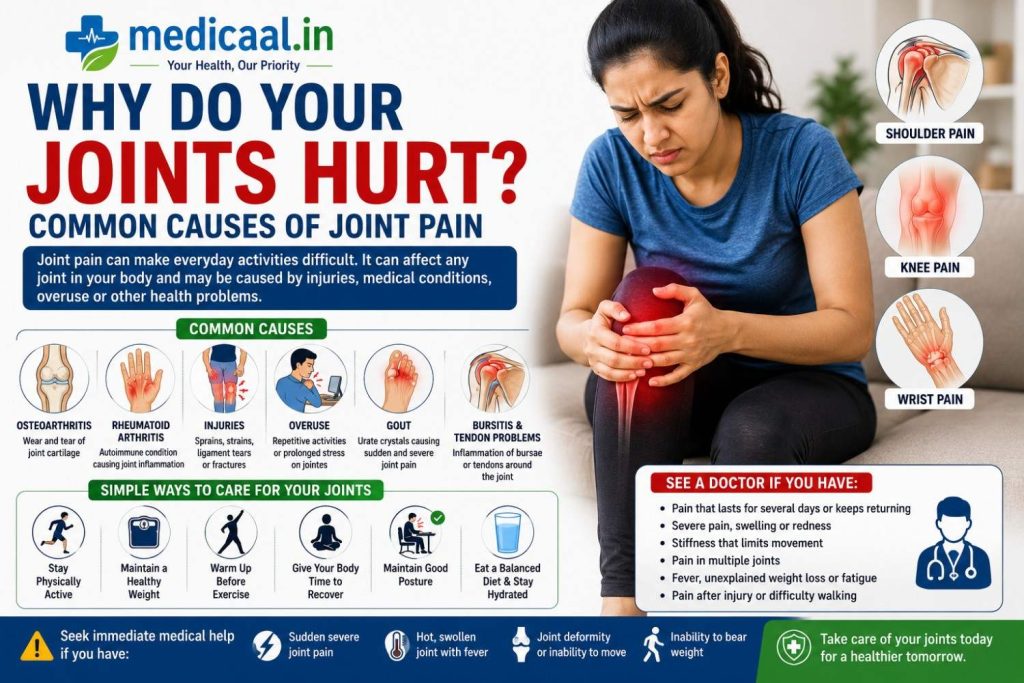
Depending on the cause, joint pain may occur along with swelling, stiffness, warmth, redness, or difficulty moving the affected joint.
Pain can affect a single joint or several joints at the same time.
Common Symptoms Associated With Joint Pain
Joint problems do not always feel the same. Some people experience a dull ache, while others may describe the pain as sharp, burning, or throbbing.
Common symptoms may include:
- Pain around the joint
- Stiffness
- Swelling
- Reduced range of movement
- Tenderness
- Warmth around the joint
- Redness in some cases
- Difficulty walking or using the affected body part
- Pain that becomes worse with certain movements
The symptoms can depend greatly on the underlying cause.
1. Osteoarthritis
Osteoarthritis is one of the most common causes of joint pain, particularly as people get older.
It occurs when the tissues within a joint gradually change over time. The cartilage that helps cushion the ends of bones can become damaged or worn, which can contribute to pain and stiffness.
Osteoarthritis commonly affects the knees, hips, hands, and spine.
People with osteoarthritis may notice pain during or after movement. Stiffness can also occur after periods of inactivity, such as when getting up after sitting for a long time.
Although age is an important risk factor, osteoarthritis is not simply an unavoidable part of getting older. Previous joint injuries, excess body weight, repetitive stress on a joint, and other factors can also influence risk.
2. Rheumatoid Arthritis
Rheumatoid arthritis is an autoimmune condition in which the immune system mistakenly attacks tissues in the joints.
It can cause inflammation, pain, swelling, and stiffness. Rheumatoid arthritis often affects joints on both sides of the body, such as both hands or both knees.
Morning stiffness that lasts for a significant period can be a feature of inflammatory arthritis.
Because rheumatoid arthritis can cause progressive joint damage if untreated, people experiencing persistent swelling, stiffness, or pain in multiple joints should discuss their symptoms with a healthcare professional.
3. Joint Injuries
An injury is another common reason for joint pain.
Sports injuries, falls, accidents, twisting movements, or lifting something incorrectly can damage structures around a joint.
Common injuries include sprains, strains, ligament injuries, and other soft-tissue damage.
Pain after an injury may be accompanied by swelling, bruising, stiffness, or difficulty moving the affected joint.
If an injury causes severe pain, significant swelling, an obvious deformity, or an inability to put weight on the affected limb, medical evaluation may be necessary.
4. Overuse and Repetitive Movements
You do not necessarily need a major injury to develop joint discomfort.
Repeating the same movement again and again can place stress on certain joints and surrounding tissues. This can happen in sports, physically demanding jobs, construction work, typing, or other repetitive activities.
For example, repeatedly using the hands and wrists for long periods may contribute to discomfort in those areas.
Taking appropriate breaks, using correct techniques, and avoiding excessive strain may help reduce the risk of overuse-related problems.
5. Gout
Gout is a type of inflammatory arthritis that can cause sudden and intense joint pain.
It occurs when urate crystals build up in and around a joint. The big toe is a common location, although gout can affect other joints as well.
A gout attack may cause severe pain, swelling, redness, and warmth in the affected joint.
People who experience sudden severe joint pain, particularly if the joint becomes swollen and red, should seek medical advice rather than assuming it is simply an injury.
6. Bursitis
Small fluid-filled sacs called bursae help reduce friction between bones, muscles, tendons, and other tissues around joints.
When a bursa becomes inflamed, the condition is called bursitis.
Bursitis can develop because of repetitive movements, prolonged pressure, injury, or certain medical conditions.
It commonly affects areas such as the shoulder, elbow, hip, and knee.
Resting the affected area and avoiding activities that make the pain worse may help in some cases, but persistent symptoms should be assessed by a healthcare professional.
7. Tendon Problems
Tendons connect muscles to bones. When a tendon becomes irritated or damaged, pain can occur around the joint.
Tendon problems may develop due to repetitive activities, sports, sudden increases in exercise, or other forms of physical stress.
The pain may become more noticeable when using the affected muscle or joint.
Proper activity progression, rest, and appropriate rehabilitation can be important depending on the specific problem.
8. Infections and Other Conditions
In some cases, joint pain can be related to an infection or another medical condition.
An infected joint can cause severe pain, swelling, warmth, and difficulty moving the joint. Fever or feeling generally unwell may also occur.
A painful, swollen joint accompanied by fever requires prompt medical attention because some joint infections can become serious quickly.
Other illnesses can also cause pain in multiple joints, which is why persistent or unexplained symptoms should not be self-diagnosed.
How Does Age Affect Joint Pain?
Joint pain becomes more common with age, partly because some joint conditions become more likely over time.
However, joint pain is not limited to older adults. Younger people can experience joint pain because of sports injuries, repetitive activities, autoimmune conditions, infections, or other causes.
Therefore, age alone cannot determine the reason behind joint pain.
Does Body Weight Affect Joint Health?
Body weight can influence stress on weight-bearing joints such as the knees and hips.
Maintaining a healthy weight may reduce mechanical stress on these joints and can be beneficial for overall health.
If you are trying to lose weight, gradual changes in diet and physical activity are generally more sustainable than extreme diets or sudden restrictions.
People with significant joint pain should choose physical activities that are appropriate for their condition and discuss exercise options with a healthcare professional when necessary.
Simple Ways to Care for Painful Joints
The best treatment depends on the underlying cause, but several general habits can support joint health.
Stay Physically Active
Regular movement can help maintain muscle strength, flexibility, and overall mobility.
Low-impact activities such as walking, swimming, cycling, or appropriate stretching may be easier on painful joints than high-impact activities.
However, if a particular activity significantly increases your pain, stop and seek appropriate advice.
Maintain a Healthy Weight
If you are above a healthy weight, even gradual weight loss may reduce the load placed on weight-bearing joints.
A balanced diet combined with regular physical activity is generally a better long-term approach than extreme weight-loss methods.
Warm Up Before Exercise
Starting intense physical activity without preparation may increase the chance of injury.
A gentle warm-up can prepare your muscles and joints for exercise. Increase exercise intensity gradually rather than making sudden changes.
Give Your Body Time to Recover
Rest and recovery are important, particularly after strenuous physical activity.
If a joint becomes painful after exercise, temporarily reducing activities that worsen the pain may be helpful. However, prolonged inactivity is not always beneficial, so the appropriate balance depends on the cause of the pain.
Pay Attention to Your Posture
Poor posture can place unnecessary stress on muscles and joints, especially during long periods of sitting or working.
Adjust your workstation, avoid staying in one position for too long, and take movement breaks during extended periods of sitting.
When Should You See a Doctor?
Not every episode of joint pain requires medical treatment. Mild pain after unusual physical activity may improve with rest and time.
However, medical advice is important when joint pain:
- Persists for several days or keeps returning
- Becomes increasingly severe
- Causes significant swelling
- Limits normal movement
- Affects several joints
- Is accompanied by unexplained weight loss or persistent fatigue
- Occurs with fever
- Develops without an obvious reason
A healthcare professional can examine the affected joint and determine whether further tests, imaging, or specialist evaluation may be needed.
When Is Joint Pain an Emergency?
Certain symptoms should not be ignored.
Seek urgent medical attention if a joint suddenly becomes extremely painful, swollen, hot, or red, particularly when accompanied by fever or feeling seriously unwell.
You should also seek prompt care after a major injury if the joint appears deformed, you cannot move it normally, or you cannot put weight on the affected limb.
Early evaluation can be important for certain injuries and infections.
Can Joint Pain Be Prevented?
Not every cause of joint pain can be prevented. Conditions such as autoimmune diseases and some forms of arthritis may develop despite healthy habits.
However, taking care of your joints can reduce certain avoidable risks.
Regular physical activity, maintaining a healthy weight, using proper techniques during exercise or physical work, wearing suitable protective equipment when appropriate, and allowing adequate recovery time can all support joint health.
It is also helpful to avoid suddenly increasing the intensity or duration of exercise. Gradual progression gives your body time to adapt.
Final Thoughts
Joint pain can have many different causes, ranging from temporary overuse and minor injuries to conditions such as osteoarthritis, rheumatoid arthritis, gout, bursitis, and infections.
The location, duration, severity, and accompanying symptoms can provide important clues, but they cannot replace a professional medical evaluation.
If your joint pain is mild and related to a known activity, simple measures such as reducing strain, staying appropriately active, maintaining a healthy weight, and allowing adequate recovery may help.
However, persistent, severe, unexplained, or recurrent joint pain deserves proper attention. Swelling, redness, warmth, fever, significant loss of movement, or severe pain following an injury are reasons to seek medical advice promptly.
Taking care of your joints is not only about treating pain after it starts. Building healthy habits, staying active, maintaining a suitable body weight, and protecting your joints during physical activities can all contribute to better mobility and quality of life.
Medical Disclaimer: This article is intended for general educational and informational purposes only. It should not be considered a substitute for professional medical advice, diagnosis, or treatment. If you have persistent, severe, or unexplained joint pain, consult a qualified healthcare professional.

The Medicaal Editorial Team researches everyday health and nutrition topics and explains them in simple, practical language. Our articles are written for general wellness education — to help readers understand common health questions without the jargon.