The liver is one of the most important organs in the human body. It performs more than 500 essential functions, including filtering toxins from the blood, producing bile for digestion, storing nutrients, regulating blood sugar, and helping your body process fats, proteins, and carbohydrates.
Despite its incredible ability to repair itself, the liver can become damaged due to poor eating habits, obesity, excessive alcohol consumption, certain medications, and viral infections. Fortunately, adopting a healthy diet and lifestyle can help support liver function and reduce the risk of liver-related diseases.
In this article, we’ll explore the best foods for a healthy liver, foods to avoid, and practical tips to keep your liver functioning at its best.
Why Liver Health Matters
A healthy liver is essential for overall well-being. It helps:
- Remove toxins and waste products from the body
- Produce bile for fat digestion
- Store vitamins and minerals
- Regulate cholesterol levels
- Maintain healthy blood sugar levels
- Support metabolism and energy production
When the liver is not functioning properly, it can affect many other organs and lead to fatigue, digestive issues, and serious health conditions.
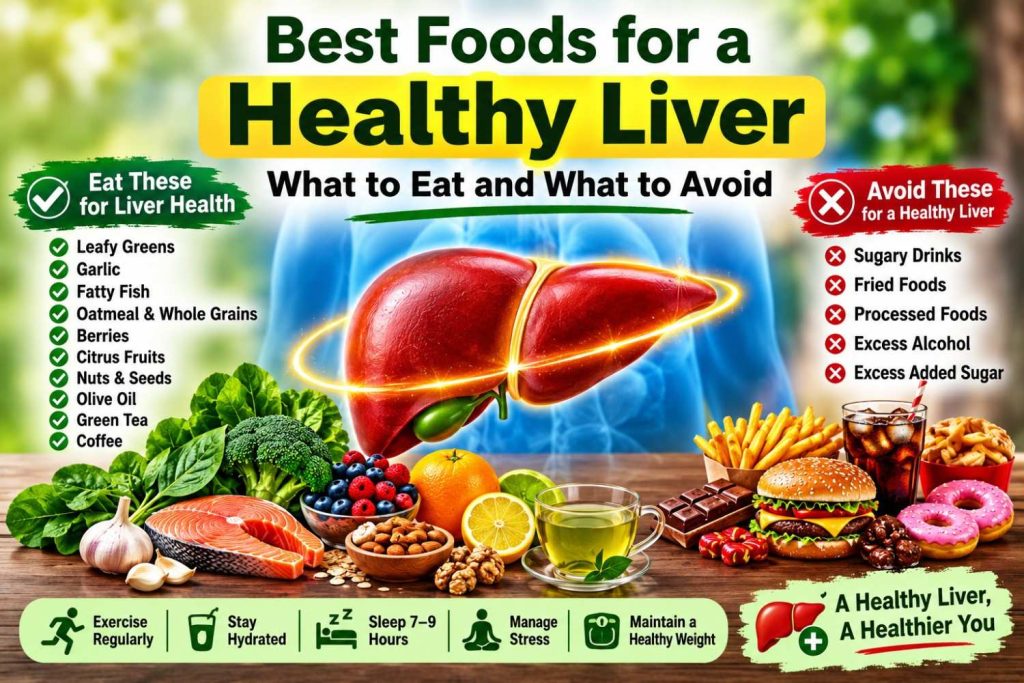
Best Foods for a Healthy Liver
1. Leafy Green Vegetables
Green vegetables such as spinach, kale, mustard greens, and fenugreek leaves are rich in antioxidants, vitamins, and fiber. These nutrients help reduce oxidative stress and support the liver’s natural detoxification process.
Best choices:
- Spinach
- Kale
- Broccoli
- Cabbage
- Fenugreek leaves
2. Garlic
Garlic contains sulfur compounds that activate liver enzymes responsible for removing harmful substances from the body. It also contains selenium, an important mineral that supports liver function.
Adding fresh garlic to your daily meals is a simple way to support overall liver health.
3. Fatty Fish
Fish such as salmon, sardines, tuna, and mackerel are excellent sources of Omega-3 fatty acids.
Omega-3 fats may help reduce inflammation and support people with non-alcoholic fatty liver disease (NAFLD) when combined with a healthy lifestyle.
Aim for two servings of fatty fish each week.
4. Oatmeal and Whole Grains
Foods rich in fiber support digestion and may reduce fat accumulation in the liver.
Healthy options include:
- Oats
- Brown rice
- Whole wheat
- Barley
- Quinoa
Fiber also helps maintain healthy cholesterol and blood sugar levels.
5. Berries
Blueberries, strawberries, raspberries, and blackberries contain antioxidants called anthocyanins that help protect liver cells from oxidative damage.
These fruits also provide vitamin C and dietary fiber.
6. Citrus Fruits
Oranges, lemons, grapefruits, and sweet limes are rich in vitamin C and antioxidants that support the body’s natural defense system.
Eating whole fruits is generally healthier than drinking packaged fruit juices because whole fruits contain more fiber and less added sugar.
7. Nuts and Seeds
Walnuts, in particular, provide Omega-3 fatty acids that may benefit liver health.
Choose unsalted varieties whenever possible.
8. Olive Oil
Extra virgin olive oil is considered one of the healthiest cooking oils.
When used in moderation, it may help reduce liver fat and improve markers of liver function as part of a balanced diet.
Avoid deep frying even with healthy oils.
9. Green Tea
Green tea contains plant compounds called catechins that have antioxidant properties.
Several studies suggest that regular green tea consumption may support liver health, although excessive intake of concentrated green tea supplements should be avoided.
One to three cups daily is generally sufficient for most healthy adults.
10. Coffee
Surprisingly, moderate coffee consumption has been associated with better liver health in several studies.
Drinking two to three cups of plain coffee per day may help reduce the risk of certain chronic liver diseases in healthy adults.
Avoid excessive sugar and high-fat creamers.
Foods to Avoid for a Healthy Liver
1. Sugary Drinks
Soft drinks, packaged fruit juices, and energy drinks often contain large amounts of added sugar.
Excess sugar may increase fat storage in the liver over time.
Replace sugary drinks with:
- Water
- Lemon water (without added sugar)
- Coconut water
- Herbal tea
2. Fried Foods
French fries, chips, fried chicken, and other deep-fried foods are high in unhealthy fats and calories.
Frequent consumption can contribute to weight gain and fatty liver disease.
Choose grilled, steamed, or baked foods instead.
3. Processed Foods
Packaged snacks, instant noodles, processed meats, and fast foods often contain excessive salt, unhealthy fats, preservatives, and refined carbohydrates.
Eating these foods regularly may negatively affect liver and heart health.
4. Excess Alcohol
Alcohol is one of the leading causes of liver damage worldwide.
Heavy drinking increases the risk of:
- Fatty liver disease
- Alcoholic hepatitis
- Liver cirrhosis
Limiting or avoiding alcohol is one of the best ways to protect your liver.
5. Excess Added Sugar
Many desserts, candies, pastries, and sweetened cereals contain high amounts of added sugar.
Too much sugar may contribute to obesity and fatty liver disease.
Lifestyle Habits That Support Liver Health
Exercise Regularly
Aim for at least 150 minutes of moderate physical activity every week.
Walking, cycling, swimming, and strength training all support healthy metabolism.
Maintain a Healthy Weight
Being overweight increases the risk of fatty liver disease.
Even modest weight loss may improve liver function in people with excess liver fat.
Stay Hydrated
Water supports digestion, circulation, and overall metabolic health.
Drink enough fluids throughout the day based on your activity level and climate.
Sleep Well
Adults should aim for 7–9 hours of quality sleep each night.
Poor sleep may affect metabolism and overall health.
Avoid Unnecessary Medications
Some medicines and herbal supplements may affect the liver if taken improperly.
Always use medications according to medical advice.
Signs That May Indicate Liver Problems
Consult a healthcare professional if you experience:
- Persistent fatigue
- Yellowing of the skin or eyes (jaundice)
- Swelling in the abdomen
- Dark-colored urine
- Pale stools
- Loss of appetite
- Unexplained weight loss
Early diagnosis can improve treatment outcomes.
Common Myths About Liver Health
Myth 1: Detox drinks can completely cleanse the liver.
Fact: Your liver naturally detoxifies your body. No single drink or juice can “clean” the liver overnight.
Myth 2: Only alcohol damages the liver.
Fact: Obesity, diabetes, viral infections, certain medications, and unhealthy diets can also affect liver health.
Myth 3: Liver disease always causes symptoms.
Fact: Many liver conditions develop silently and may not show symptoms until they become more advanced.
Conclusion
Your liver works around the clock to keep your body healthy, making it essential to care for it through balanced nutrition and healthy habits. A diet rich in vegetables, fruits, whole grains, healthy fats, lean proteins, and fiber can support normal liver function. At the same time, limiting sugary drinks, processed foods, fried foods, and excessive alcohol can help reduce the risk of liver disease.
Remember, there is no miracle food that guarantees a healthy liver. Long-term health depends on consistent lifestyle choices, regular physical activity, adequate sleep, and routine medical check-ups when needed.
Frequently Asked Questions (FAQs)
1. Which fruit is best for liver health?
Berries, oranges, grapefruit, apples, and avocados are nutritious fruits that can be part of a liver-friendly diet.
2. Is coffee good for the liver?
Research suggests that moderate coffee consumption may support liver health in many adults. However, avoid excessive sugar and high-calorie additives.
3. Can fatty liver be improved naturally?
In many cases, fatty liver can improve with weight management, regular exercise, a healthy diet, and medical guidance when necessary.
4. Are detox drinks necessary?
No. The liver naturally detoxifies the body. Maintaining a healthy diet and lifestyle is more beneficial than relying on detox products.
5. What is the worst food for the liver?
Foods high in added sugar, trans fats, excessive saturated fat, heavily processed snacks, and excessive alcohol are among the least healthy choices for liver health.

The Medicaal Editorial Team researches everyday health and nutrition topics and explains them in simple, practical language. Our articles are written for general wellness education — to help readers understand common health questions without the jargon.