
While many people still feel young and energetic, this is the age when the risk of lifestyle-related conditions such as high blood pressure, diabetes, high cholesterol, obesity, and heart disease gradually begins to increase. The good news is that many of these conditions develop slowly and often show no symptoms in their early stages.
Regular health checkups can help detect potential problems before they become serious. Early diagnosis often leads to better treatment outcomes, lower medical costs, and a healthier life. Even if you feel perfectly healthy, routine screenings are an essential part of preventive healthcare.
In this article, we’ll discuss the important health tests that adults should consider after the age of 30 and how often they may need them.
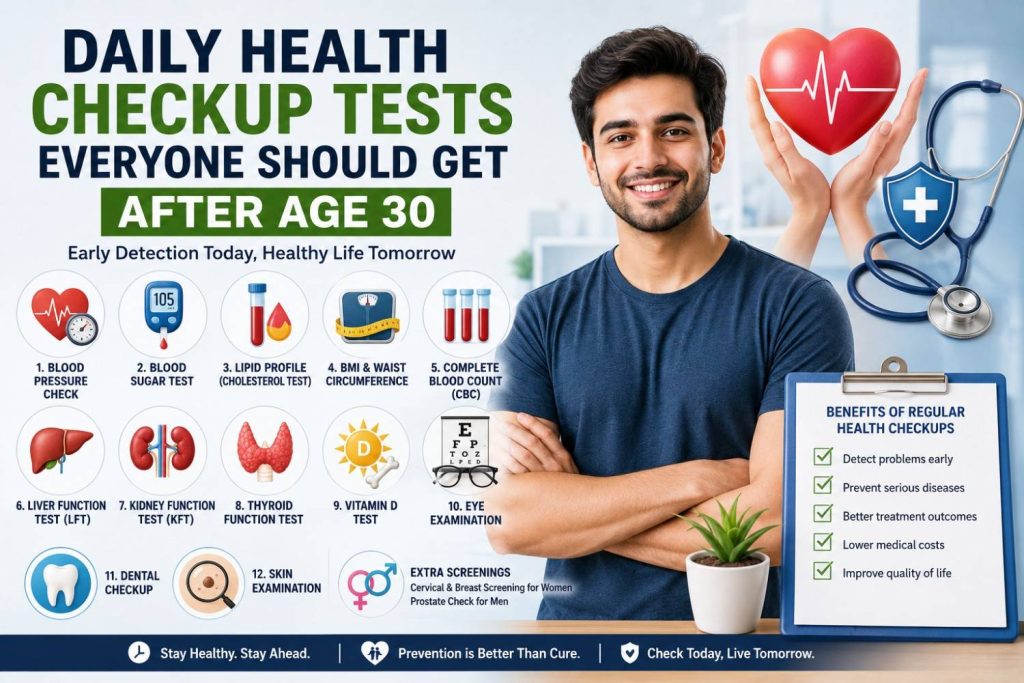
Why Regular Health Checkups Matter
Routine medical checkups can help:
- Detect diseases early
- Monitor overall health
- Reduce the risk of complications
- Improve long-term quality of life
- Encourage healthier lifestyle habits
Preventive healthcare is often more effective than treating advanced illnesses.
1. Blood Pressure Check
Why It Matters
Untreated high blood pressure increases the risk of:
- Heart attack
- Stroke
- Kidney disease
- Heart failure
Recommended Frequency
- More often if advised by your healthcare provider.
2. Blood Sugar Test
A fasting blood sugar test or HbA1c test helps detect prediabetes and diabetes.
Why It Matters
Early detection allows lifestyle changes that may delay or prevent diabetes-related complications.
Recommended Frequency
- Every 1–3 years for healthy adults.
- More frequently if you are overweight, have a family history of diabetes, or have other risk factors.
3. Lipid Profile (Cholesterol Test)
This blood test measures:
- Total cholesterol
- LDL (“bad” cholesterol)
- HDL (“good” cholesterol)
- Triglycerides
Why It Matters
High cholesterol can increase the risk of heart disease without causing noticeable symptoms.
Recommended Frequency
Every 4–6 years for low-risk adults, or more often if recommended by your doctor.
4. Body Mass Index (BMI) and Waist Circumference
Doctors often measure:
- Height
- Weight
- BMI
- Waist circumference
Excess abdominal fat is associated with diabetes and cardiovascular disease.
5. Complete Blood Count (CBC)
A CBC evaluates:
- Red blood cells
- White blood cells
- Hemoglobin
- Platelets
Why It Matters
This test may help identify:
- Anemia
- Certain infections
- Some blood disorders
6. Liver Function Test (LFT)
The liver performs hundreds of essential functions, including filtering toxins and supporting digestion.
Why It Matters
An LFT may help detect:
- Fatty liver disease
- Hepatitis
- Liver inflammation
- Medication-related liver effects
7. Kidney Function Test (KFT)
Kidney tests usually include:
- Creatinine
- Blood urea nitrogen (BUN)
- Estimated glomerular filtration rate (eGFR)
Why It Matters
Kidney disease often progresses silently in its early stages.
8. Thyroid Function Test
Thyroid hormones regulate metabolism, energy, and body temperature.
Symptoms That May Suggest a Thyroid Problem
- Fatigue
- Weight changes
- Hair loss
- Mood changes
- Feeling unusually cold or hot
Testing may be appropriate if symptoms or risk factors are present.
9. Vitamin D Test
Vitamin D supports:
- Bone health
- Muscle function
- Immune health
Testing may be useful for people at risk of deficiency, especially those with limited sun exposure or certain medical conditions.
10. Eye Examination
Even if your vision seems normal, regular eye exams can detect:
- Glaucoma
- Cataracts
- Refractive errors
- Early diabetic eye disease
Adults should have periodic comprehensive eye examinations based on age and individual risk.
11. Dental Checkup
Oral health is closely linked to overall health.
Routine dental visits help detect:
- Tooth decay
- Gum disease
- Oral infections
Most people benefit from dental checkups every six months, though your dentist may recommend a different schedule.
12. Skin Examination
Check your skin regularly for:
- New moles
- Changes in existing moles
- Non-healing sores
- Unusual growths
If you notice suspicious changes, consult a dermatologist.
Additional Screening for Women
Women may need additional preventive screenings, including:
- Cervical cancer screening (Pap test) as recommended by healthcare guidelines
- Breast health evaluation based on age and risk
- Bone health assessment when appropriate
Additional Screening for Men
Men may benefit from discussions with their healthcare provider about:
- Prostate health, especially with increasing age or family history
- Testicular self-awareness and examination if any unusual changes occur
Healthy Habits That Reduce Health Risks
Routine tests work best when combined with healthy lifestyle choices:
- Exercise for at least 150 minutes per week.
- Maintain a healthy weight.
- Sleep for 7–9 hours every night.
- Avoid smoking.
- Limit alcohol consumption.
- Manage stress through relaxation techniques.
- Stay hydrated.
Warning Signs You Should Never Ignore
Seek medical attention if you experience:
- Persistent chest pain
- Difficulty breathing
- Unexplained weight loss
- Blood in urine or stool
- Severe fatigue
- Frequent fainting
- Persistent fever
- Sudden vision changes
These symptoms require prompt medical evaluation.
Common Myths About Health Checkups
Myth 1: I feel healthy, so I don’t need tests.
Fact: Many chronic diseases develop without obvious symptoms.
Myth 2: Health checkups are only for older adults.
Fact: Preventive screening often begins much earlier and becomes increasingly important after age 30.
Myth 3: One normal report means I’m healthy forever.
Fact: Health changes over time, which is why regular follow-up is important.
Conclusion
After the age of 30, preventive healthcare becomes more important than ever. Regular health checkups can identify conditions such as diabetes, high blood pressure, high cholesterol, thyroid disorders, and liver or kidney problems before they cause serious complications.
The exact tests and screening schedule vary based on your age, family history, lifestyle, and personal risk factors. Speak with your healthcare provider to create a screening plan that is appropriate for you. Combining routine checkups with healthy habits is one of the best investments you can make for your long-term health.
Frequently Asked Questions (FAQs)
1. How often should adults over 30 get a health checkup?
Many healthy adults benefit from an annual general health checkup, though specific tests may be recommended more or less frequently depending on individual risk factors.
2. Which blood test is most important after age 30?
There is no single most important test. Commonly recommended tests include blood sugar, lipid profile, complete blood count, and kidney and liver function tests based on your health needs.
3. Do healthy people need routine screening?
Yes. Many conditions such as high blood pressure and high cholesterol may not cause symptoms in their early stages.
4. Can lifestyle changes reduce the need for medications?
In some cases, healthy eating, exercise, weight management, and other lifestyle changes may help prevent or improve certain conditions. Always follow your healthcare provider’s advice.
5. Should I take vitamin tests every year?
Not necessarily. Vitamin testing is generally recommended when you have symptoms, risk factors, or if your healthcare provider advises it.

The Medicaal Editorial Team researches everyday health and nutrition topics and explains them in simple, practical language. Our articles are written for general wellness education — to help readers understand common health questions without the jargon.